
Match.com Dating App Cost and Features
April 22, 2026
Match Login Guide
April 23, 2026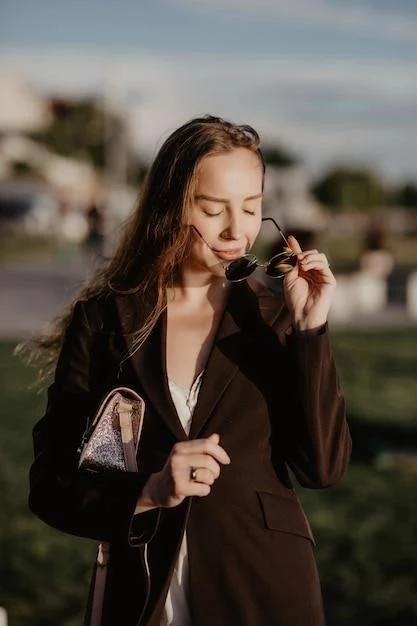
In the bustling, often bewildering, modern landscape of digital romance, the allure of a “perfect match” stands as the ultimate, irresistible promise. Dating applications, with their increasingly sophisticated algorithms and impeccably designed user interfaces, ceaselessly strive to present an idealized vision of love and companionship. This vision is frequently embodied by a singularly radiant, seemingly flawless individual featured prominently in their advertising campaigns. This article embarks on a detailed exploration of the hypothetical, yet profoundly relatable, narrative of “Chloe,” the fictional face meticulously chosen to represent the aspirational success and unparalleled efficacy of the “EverLuv” dating application. We will meticulously unravel the intricate process behind the creation of her compelling public persona, juxtaposing it sharply against the often-complex reality of her private life, and meticulously examining the far-reaching psychological and social implications of living under the formidable shadow of an impossibly perfect, commercially curated image.
The Genesis of an Icon: Crafting the “Perfect Match” Narrative
Casting the Ideal Face: Chloe’s Meticulous Selection
The astute marketing strategists behind EverLuv understood implicitly that to truly capture the hearts and secure a dominant share of the competitive market, they required something far more compelling than merely a highly functional app; they needed to sell a dream, an aspirational vision of effortless love. Their exhaustive search for the quintessential brand ambassador ultimately led them to Chloe. She was neither a conventional supermodel, with an air of unattainable glamour, nor a widely recognized celebrity whose existing fame might overshadow the product. Instead, Chloe possessed an ethereal blend of genuine approachability and understated elegance. Her smile, inherently authentic and radiating warmth, seemed to promise not just fleeting happiness, but the profound depth of an authentic, lasting connection. She was meticulously chosen to be the quintessential “girl next door,” someone sufficiently relatable for potential users to effortlessly envision themselves finding similar joy and profound connection, yet simultaneously aspirational enough to embody the app’s ultimate, most coveted promise. Her initial portfolio, submitted through a local talent agency, prominently showcased her natural expressiveness and a certain endearing vulnerability that resonated deeply and immediately with the creative directors.
The casting process itself was exceptionally rigorous, extending far beyond superficial physical attractiveness. The team actively sought an individual capable of conveying a compelling narrative: the emotional journey from an optimistic single seeking connection to a blissfully matched individual. Chloe’s subtle, nuanced expressions, her remarkable ability to convey both eager anticipation and serene contentment within a single frame, rendered her the unanimous and unequivocal choice. She thus became the living canvas upon which EverLuv would meticulously paint its grand vision of algorithmic destiny and romantic fulfillment.
The Ad Campaign’s Irresistible, Ubiquitous Promise
With Chloe firmly cast, the powerful creative machinery of the advertising industry whirred into high-speed action. The EverLuv campaign was meticulously designed to be both ubiquitous in its reach and powerfully aspirational in its messaging. Images of Chloe, radiating an infectious joy, swiftly flooded billboards across major cities, permeated social media feeds with viral efficiency, and graced television screens during prime-time slots. She was artfully depicted in a myriad of idyllic, romantic scenarios: sharing genuine laughter over an artisanal coffee, enjoying a picturesque sunset stroll hand-in-hand, exchanging knowing, tender glances across a charming picnic blanket, and navigating a bustling city square with an air of shared intimacy. Each meticulously staged tableau was expertly crafted to evoke profound warmth, undeniable intimacy, and an overwhelming sense of effortless compatibility. The accompanying tagline, often elegantly emblazoned in a sophisticated, stylish font, declared with an unwavering, almost prophetic confidence: “Your perfect match is just a swipe away. Discover your EverLuv.”
This sophisticated campaign transcended the mere act of selling a digital service; it was, at its core, selling a desirable lifestyle, a profound emotional outcome. It subtly, yet powerfully, suggested that the path to profound happiness and an ultimate soulmate connection was not only entirely possible but virtually guaranteed through their proprietary, cutting-edge matching algorithm. Chloe, with her inherent radiance and compelling authenticity, thus became the living, breathing embodiment of this digital utopia, a shining beacon of hope for millions of individuals actively searching for their own perfectly written love story;
Behind the Pixelated Smile: Chloe’s Unseen Reality
Life Before the Spotlight: A Regular, Often Faltering Pursuit of Connection
Before the powerful EverLuv campaign dramatically transformed her into a ubiquitous symbol of modern romance and algorithmic success, Chloe lived a life strikingly similar to that of many, if not most, of the app’s primary target users. She was a diligently focused marketing student at a respected state university, deftly balancing the demanding rigors of her coursework with the responsibilities of a part-time job at a beloved local bookstore. Her personal dating life was a complex, unpredictable mosaic of typical twenty-something experiences: the nervous, stomach-fluttering anticipation of a first date, the occasional awkward silences that punctuated nascent conversations, the exhilarating sparks of genuine chemistry, the often-crushing disappointment of being unceremoniously ghosted, and the quiet, profound joy of forging a truly genuine connection. She had, in fact, experimented with several different dating apps herself, intimately experiencing the familiar cycle of initial hope, subsequent frustration, and the rare but cherished moments of authentic success. She understood the inherent limitations of algorithms firsthand, recognizing the often-disheartening way a meticulously crafted profile could still, paradoxically, lead to jarringly mismatched personalities or disappointingly superficial encounters.
Her own personal quest for lasting love was, by its very nature, messy, inherently unpredictable, and deeply, undeniably human – a stark, undeniable contrast to the seamless, flawlessly curated narratives so prominently presented in the glossy advertisements. She profoundly understood the universal human yearning for deep connection, the inherent vulnerability of putting one’s true self out there, and the often-unspoken anxieties that inevitably accompanied each hopeful swipe and every carefully composed message.
The Disconnect Between Persona and Person: A Deep Internal Dissonance
The remarkable and swift transition from an ordinary, unassuming student to the iconic “EverLuv Girl” inevitably created a profound and persistent internal dissonance for Chloe. On one hand, she genuinely felt a sense of pride in her professional work, harbored immense gratitude for the unique opportunity, and thoroughly enjoyed the creative, collaborative aspects of the photo and video shoots. On the other hand, the perfected persona she was handsomely compensated to embody felt increasingly alien and disconnected from her authentic self. The “Chloe” depicted in the EverLuv advertisements was perpetually blissful, effortlessly charming, and seemingly entirely free from the intricate complexities and inevitable heartbreaks that undeniably define real, evolving relationships. She was, in essence, a perfected, significantly amplified version of her true self, meticulously stripped of all vulnerability, all doubt, and every trace of imperfection. This meticulously curated, flawless image stood in stark, undeniable contrast to her own ongoing, very real struggles with self-doubt, the pervasive pressures of her demanding academic life, and her very real, often imperfect, and frequently challenging dating experiences.
Every time she caught sight of her own smiling, idealized face on a towering billboard or heard the catchy jingle featuring her likeness emanating from a passing car, a subtle but persistent pang of discomfort would arise within her. She intimately knew the unvarnished truth behind the glossy veneer, and that unvarnished truth was far more nuanced, considerably messier, and undeniably more authentically human than the polished, idealized narrative so skillfully presented to the eager public. It served as a constant, unwelcome reminder of the ever-widening gap between pervasive public perception and her private reality, a profound gap she was now, quite inadvertently, complicit in actively creating and perpetuating.
The Weight of Expectation: Living as the “Perfect Match” Girl
Public Perception vs. Private Life: A Constant, Exhausting Performance
As the groundbreaking EverLuv campaign gained significant traction and reached unprecedented levels of saturation, Chloe’s precious anonymity began its rapid, inevitable evaporation. She started to be recognized with increasing frequency – during routine trips to the grocery store, while commuting on crowded public transport, and even by fellow students within the familiar confines of her university campus. This recognition was, more often than not, accompanied by well-meaning but ultimately intrusive questions: “Did you actually find your perfect match on EverLuv?” or “Is it genuinely as easy as the ads make it seem?” People, captivated by the campaign’s compelling narrative, began to project the ad’s idealized story directly onto her, fully expecting her personal life to mirror the effortless joy and seamless connection so vividly depicted. Some erroneously assumed she was perpetually ensconced in a blissful, perfect relationship, while others approached her with a palpable sense of cynical curiosity, eager to uncover the “unvarnished truth” hidden behind the carefully constructed facade. This intense public scrutiny subtly, but powerfully, forced Chloe into a subtle, almost subconscious, and increasingly exhausting performance. She felt an overwhelming, unspoken obligation to consistently uphold the pristine EverLuv image, to appear perpetually cheerful, effortlessly confident, and perfectly composed, even during those numerous private moments when her personal life was anything but.
The immense pressure to consistently live up to her advertising persona became an increasingly heavy and suffocating burden. Casual conversations, which should have been light and unburdened, frequently felt more like probing interviews, and virtually every social interaction she engaged in was filtered through the pervasive, distorting lens of her formidable public image. The once distinct line between Chloe the authentic person and Chloe the meticulously crafted brand ambassador blurred irrevocably, making the pursuit of genuine connection even more elusive and profoundly challenging.
Navigating the Dating Landscape Post-Ad: A Complicated, Irony-Laden Affair
Perhaps the most profound and unexpected impact of her prominent advertising role was its direct, often detrimental, effect on Chloe’s own personal dating life. The very dating applications she so successfully promoted became, for her, psychological minefields. Potential matches, upon recognizing her from the omnipresent campaign, frequently reacted in one of two extreme and equally challenging ways. Some immediately placed her on an impossible, ethereal pedestal, expecting her to be the living embodiment of perfection, an ideal partner seemingly plucked directly from an aspirational marketing campaign. Others approached her with a deep-seated skepticism, erroneously assuming that her involvement in the campaign inherently meant she was either disingenuous, perpetually “acting,” or already securely committed to a relationship. These polarized reactions made the prospect of establishing any authentic, meaningful connection incredibly difficult, if not entirely impossible.
Dates were, more often than not, fraught with uncomfortable discussions about the ubiquitous ad, inevitably overshadowing any genuine opportunity for meaningful conversation about shared interests, compatible personalities, or authentic life experiences. She felt an immense, crippling pressure to always be “on,” to meticulously maintain the flawless, charming image she portrayed on screen, rather than simply being her authentic, imperfect self. The profound irony of her situation was certainly not lost on her: the young woman who had become the very symbol of finding a “perfect match” now struggled more intensely than ever before to find a genuine, unburdened connection in her own life, constantly battling pervasive preconceived notions and the overwhelming shadow of her own curated, commercialized image.
The Broader Mirror: Reflections on Digital Dating and Authenticity
The Illusion of Perfection in Digital Dating: A Pervasive Misdirection
Chloe’s fictional journey serves as a powerful and illuminating microcosm for a broader, often unacknowledged truth prevalent within the contemporary digital dating landscape: the pervasive and often damaging illusion of perfection. Dating app profiles are inherently and deliberately curated, meticulously designed to present an idealized, often heavily filtered, version of oneself. Photos are routinely enhanced, bios are carefully crafted to highlight only the most flattering aspects, and initial online interactions can frequently feel more akin to competitive auditions than genuine, spontaneous introductions. The elusive “perfect match” so confidently promised by numerous dating apps often remains an unattainable ideal, fundamentally a sophisticated marketing construct meticulously designed to attract, engage, and retain users, rather than a consistently achievable or realistic romantic reality. This relentless pursuit of an imagined perfection can tragically lead to profound disappointment, entrenched superficiality, and a significantly diminished appreciation for the beautiful, inherent imperfections that truly define and enrich real human relationships.
The accelerating commercialization of love, relentlessly driven by complex algorithms and enticing aspirational imagery, gravely risks creating a pervasive cultural mindset where individuals endlessly swipe for an ultimately unattainable ideal, inadvertently overlooking potentially deeply meaningful connections that may not precisely fit a rigid, pre-defined, media-influenced mold. It actively fosters a consumerist, almost transactional, mindset towards relationships, where potential partners are “chosen” based on a superficial checklist of attributes rather than genuinely discovered through shared experiences, mutual vulnerability, and the organic unfolding of authentic connection.
Embracing Authenticity and Vulnerability: A Crucial Call for Real Connection
Chloe’s poignant experience powerfully underscores the critical, undeniable importance of embracing both authenticity and vulnerability in the arduous, yet ultimately rewarding, process of forming meaningful connections, whether online or offline. While dating applications undoubtedly offer unparalleled access to a vast pool of potential partners, the true magic of human connection genuinely blossoms when individuals dare to be their authentic, genuine selves, openly acknowledging their flaws, their deepest fears, and their unique, idiosyncratic quirks. For the millions of users navigating these platforms, this imperative translates into moving decisively beyond the meticulously curated profile to share real stories, genuine intentions, and unvarnished truths. For the dating apps themselves, it could signify a crucial paradigm shift towards promoting more realistic expectations and actively fostering digital environments where genuine human connection, with all its inherent, beautiful messiness and unpredictability, is celebrated and prioritized over an ultimately unattainable ideal of manufactured perfection.
Ultimately, the evocative story of the “perfect match” ad girl serves as a profound and timely reminder that while advanced technology can indeed open countless doors to new acquaintances, the authentic path to true compatibility is meticulously paved with unwavering honesty, profound empathy, and the courageous willingness to embrace our shared, imperfect humanity. It is fundamentally about seeking a good match, a real match, a truly human match, rather than perpetually chasing an impossibly perfect, commercially manufactured one.
The fictional, yet deeply resonant, journey of Chloe, the iconic “EverLuv” dating app ad girl, transcends a mere narrative; it stands as a poignant and timely reflection on the complex, often contradictory, modern pursuit of love in our increasingly digital age. Her compelling story powerfully illuminates the often-stark and disconcerting contrast between the glossy, idealized, and meticulously curated world so prominently presented in persuasive advertisements, and the intricate, beautiful, and frequently messy reality of authentic human connection. She symbolically represents the powerful aspiration, the compelling promise, and paradoxically, the inherent potential pitfalls of relying too heavily on complex algorithms and meticulously crafted, idealized images to serendipitously find our ultimate soulmates.
As we collectively navigate the ever-evolving and increasingly intricate landscape of online dating, Chloe’s compelling experience serves as an invaluable and powerful reminder to look discerningly beyond the superficial, glimmering facade of commercial perfection. It actively encourages us to critically question the often-unrealistic narratives so skillfully presented to us, to actively seek profound authenticity in all our digital interactions, and to perpetually remember that genuine, lasting connection truly thrives not in an elusive, manufactured perfection, but in the honest acceptance and heartfelt celebration of our shared, beautifully imperfect humanity. The real “perfect match” is not, and never will be, discovered within a flawlessly executed advertisement, but rather within the honest, vulnerable, and deeply human moments we courageously choose to share with another soul.
May her fictional yet resonant tale inspire a more mindful, authentic, and profoundly human approach to the timeless quest for love, both for individuals thoughtfully swiping on their screens and for the powerful digital platforms that are increasingly shaping the very fabric of our romantic journeys.